Lab 8
Simplified Technical English
Three passages, four levels each, from the original jargon to full ASD-STE100. Slide between them, see what changed, then check your own writing against the rules.
Before you start
Simplified Technical English is a controlled language for technical writing, maintained by the aerospace industry since the late 1970s and now in its ninth issue. It limits sentence length, bans the passive voice in instructions, allows one meaning per word, and makes every instruction its own sentence. It was built so that people reading English as a second language could maintain aircraft safely. It turns out to be one of the best tools we have for readers with dyslexia, aphasia, cognitive fatigue, or a screen reader running fast.
The passages below were written by hand at four levels. Level 1 is the kind of writing that appears in real manuals and help pages, two long sentences of it. Level 4 follows the rules. The levels in between show that most of the difficulty was never about length. The field note Simplified Technical English explains the rules and where they fit.
The lab
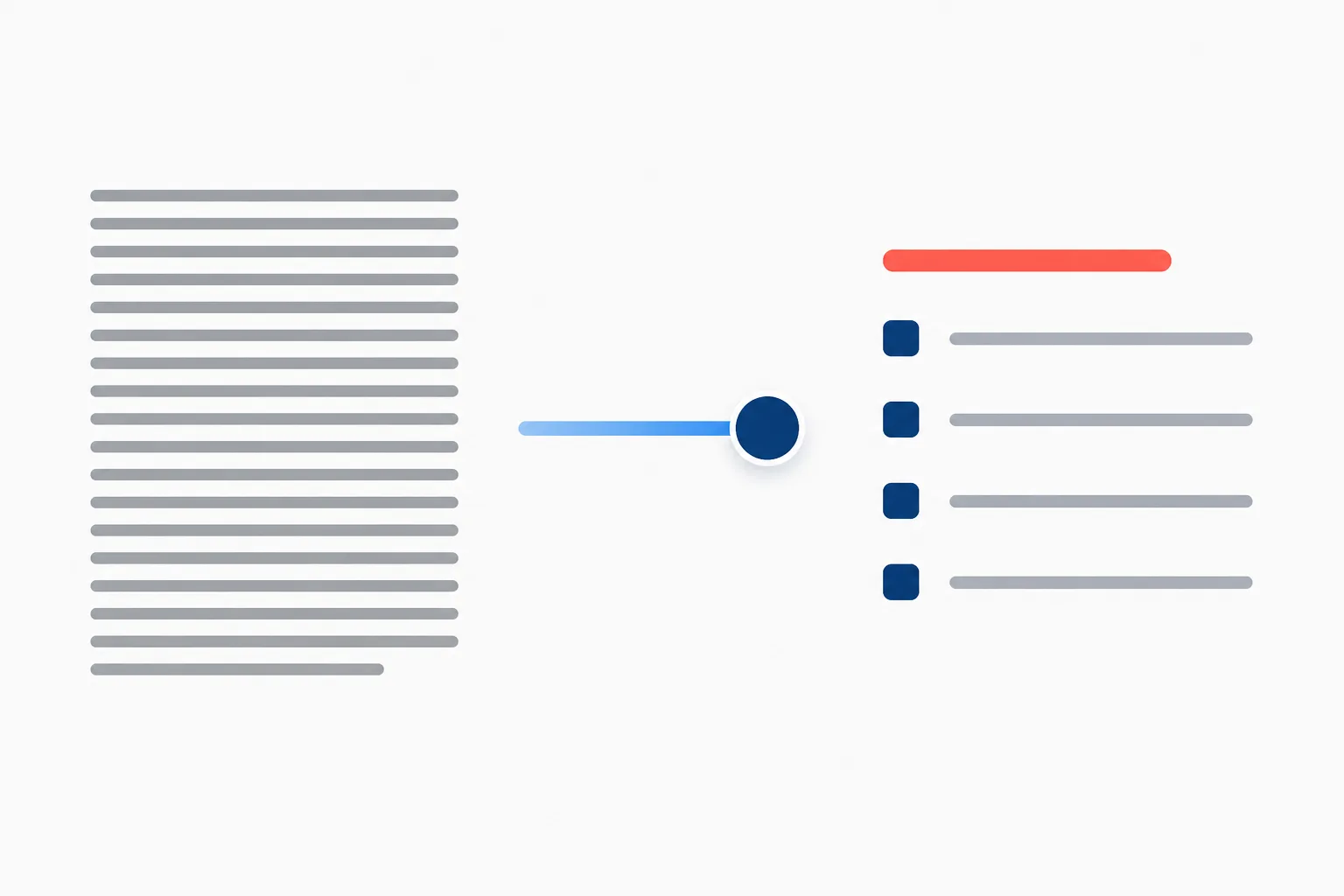
Pick a passage and move the slider. Highlights show where each rule is broken in the text that is showing; hover or focus a highlight to read why. The checks are regular expressions with a short sample of common unapproved words, not the STE dictionary, which is copyrighted and not reproduced here. They catch the obvious cases and miss the subtle ones. A trained reviewer would find more.
What you just learned
- Shortening sentences fixes less than you think. Level 2 is the same words in shorter sentences, and most of the flags survive. The vocabulary and the voice are where the difficulty lives.
- One instruction per sentence changes the shape of the text. Procedures become numbered lists in the order the reader does them, and the reader stops holding three steps in one breath.
- Warnings come first and stand alone. A warning after the step it protects is a warning most readers meet too late.
- Unapproved words are usually long ways of saying short things. "Prior to the commencement of" is "before." "Facilitate the containment of" is "contain." The approved word is almost always the one a reader in a hurry would use.
- The -ing form is a trap. It can be a verb, a noun, or an adjective, and the reader has to decide which. "Testing of the unit is required" is "Test the unit."
Using the checker with a writing agent
A tip in circulation says a model writes better when told to use ASD-STE100. Nobody has measured it. You can: rewrite a passage with a model, paste the result above and count the flags, then ask again with the rules spelled out and paste that. The lower count wins, for that model and that text. The checker cannot tell you whether the meaning survived, so read both.
Embed this lab
Host the Simplified Technical English lab on your own page with one element and one script. It runs entirely in the visitor's browser, sends nothing back, and adds a small credit link.
<div data-a11y-world-lab="ste"></div>
<script src="https://a11y.world/embed.js" async></script>
Have a before-and-after of your own?
Send the original and the rewrite. Good pairs become new passages in this lab, with credit.
Send a passage